Most people still believe building codes, chemical regulations, and food packaging standards exist purely for our protection.
Decades of evidence tell a different story. Time and again, systems sold as “safety” have incorporated persistent toxins, created dependency, and locked out harmless, abundant alternatives. This is not random inefficiency. It reveals a pattern of steal, kill, and destroy (John 10:10) operating through captured institutions — the real giants and their regulator arms.
From Humble Beginnings to Global Giants — and the Removal of Hemp
Consider the scale of the players who shaped these systems.
DuPont began in 1802 as a small gunpowder manufacturer on the banks of the Brandywine River.
It grew into one of the world’s largest chemical conglomerates, pioneering synthetics that replaced natural materials across industry. In 2015 it spun off Chemours to handle its performance chemicals business — including the PFAS “forever chemicals” now tied to widespread contamination. Today DuPont remains a multi-billion-dollar materials science powerhouse.
3M started in 1902 as a modest mining venture in Minnesota.
It evolved into a global diversified giant whose innovations touched everything from Scotch tape to firefighting foam. For decades it was a dominant force in specialty chemicals and materials. Only recently has it faced massive accountability — a $12.5+ billion settlement for PFAS pollution in drinking water systems across America.
The broader petrochemical giants (ExxonMobil, Dow, and their peers) scaled from early 20th-century oil refining into a sector whose global market now exceeds $700 billion annually and is projected to surpass $1 trillion in the coming decade.
Petrochemicals now account for a growing share of global oil demand, with plastics alone making up over 60% of output by weight. Packaging, construction, textiles, and consumer goods are saturated with their products.
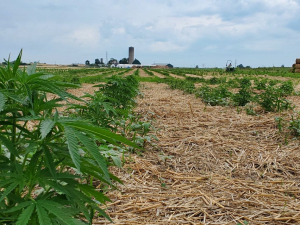
A critical enabler of this rise was the removal of hemp.
For centuries, industrial hemp was a versatile, regenerative crop used for fiber, paper, textiles, building materials, and nutrition. In 1937, the Marihuana Tax Act effectively crushed large-scale hemp production in the U.S. — lumping it with recreational marijuana and making it economically unviable — at the precise moment petrochemical synthetics (nylon, plastics, treated lumber) were scaling. This was not primarily about public safety; it cleared the field for industrial interests tied to timber, cotton, and emerging chemical giants. The abundant, healing alternative was sidelined so the toxic, profitable replacement could dominate.
These entities did not rise by accident.
Government contracts (military, aviation, firefighting), regulatory frameworks that moved slowly on known risks, tax supports, and infrastructure priorities helped them dominate. They became the invisible architecture of modern life — what we build with, what we eat from, what we wear, and what we live inside.
The Impact They Have on This World
The reach is staggering. Millions have been affected — some died fighting in the systems or unaware of the slow chemical burden in their bodies, water, and soil. PFAS, plastics, and related toxins are now in human bloodstreams globally. Health costs, environmental cleanup, and lost productivity run into trillions over decades. The public pays; the giants and their regulator enablers retain the power and profits.
Clear Examples of the Pattern
The Flame Retardant Deception
After tragic fire deaths involving children and furniture, regulators and industry pushed chemical flame retardants into mattresses, upholstery, children’s clothing, and building materials. Companies like 3M and DuPont scaled these “forever chemicals” (PFAS and related compounds) with government contracts (military, firefighting foam, airports). Internal knowledge of toxicity existed for decades. The result? Widespread bioaccumulation, hormone disruption, fertility impacts, and immune issues — now addressed through billions in settlements rather than prevention. Harmless, effective alternatives existed. The choice was made for profit and lock-in.
Plastics and Everyday Poison
The same pattern repeated with plastics. BPA (originally developed as a synthetic estrogen) and its replacements were incorporated into food containers, water bottles, and packaging. “BPA-free” often meant swapping one disruptor for another. Government standards and slow regulatory response enabled this while natural options were sidelined. The outcome: measurable population-level effects on development and reproduction. Convenience and corporate scale won; human flourishing lost.
DuPont Teflon & PFAS Contamination
DuPont’s Teflon (PTFE) production relied on PFOA (C8), a PFAS chemical. Internal documents show the company knew of toxicity risks (worker exposure, birth defects, environmental persistence) as early as the 1960s. They continued production and disposal practices that contaminated the Ohio River and drinking water for entire communities (notably around the Washington Works plant in West Virginia). The EPA eventually pursued enforcement, leading to settlements and the Chemours spin-off. This case became a landmark for PFAS accountability — billions in payouts, but only after decades of harm. The “safety” of non-stick coatings came at the cost of widespread, persistent pollution.
Building Codes and the Control of Shelter
Chapter 7A and layered state codes claim to protect against wildfire. They do reduce some risks compared to pre-code construction. But they also create massive barriers to natural, proven fire-resistant materials (hempcrete, plastered straw bale, adobe) while favoring standardized synthetics that carry long-term toxicity and higher embodied costs. In places like Pacific Palisades after the 2025 fires, people face toxic soil, slow debris removal, and code hurdles that inflate rebuilding costs and keep families in limbo. Federal tools (streamlining EOs and Appendix BL pathways) exist — yet local and state layers often block the regenerative path. “Safety” becomes a gatekeeping mechanism.
Concise Comparison: Chapter 7A “Safety” vs. Natural/Performance Alternatives
| Aspect | Chapter 7A (Prescriptive Focus) | Natural/Performance Alternatives (e.g., Hempcrete, Plastered Straw Bale, Adobe) | Notes / Reality Check |
| Fire Resistance | Good for ember/radiant heat resistance via approved materials (siding, vents, roofing). Post-2008 homes survived better in many fires (often 2–3x higher intact rates vs. pre-code). | Often equal or superior in real tests and wildfires: Plastered straw bale (1–2+ hours), hempcrete (non-combustible/high resistance), adobe (4+ hours). Real CA fire survivals documented. | Lab tests vs. real fires: Natural materials excel in ember resistance and thermal mass when detailed properly. |
| Toxicity / Health | Many compliant materials (foam, vinyl, treated lumber) off-gas VOCs and chemicals long-term. | Low-VOC, breathable, mold-resistant. Reduces indoor toxic load (aligns with MAHA). | Codes prioritize ignition resistance over cumulative chemical exposure. |
| Cost & Speed | Adds significant cost (special materials, testing). Slows permitting in rebuilds. Contributes to high Palisades rebuilding prices ($1k+/sq ft). | Potentially lower long-term (local/renewable materials). Upfront testing/engineering can be barrier. | Layered state rules on top of federal inflate costs without proportional gains. |
| Flexibility | Prescriptive lists favor standardized industrial products. Natural options often need variances. | Performance-based (prove it works via testing/engineering). More adaptable. | This is the core hypocrisy: “safety” that limits better options. |
| Soil/Land Impact | Does not address underlying soil toxicity post-fire. | Pairs well with phytoremediation (hemp/vetiver) for land healing before building. | Post-Palisades: Test soil first, then use regenerative approaches. |
Bottom line: Chapter 7A has real benefits in ember-prone wildfires compared to older unregulated construction, but its implementation creates unnecessary barriers, cost inflation, and bias toward synthetics. It is not purely about optimal safety — economic incentives and standardization play a big role. Natural materials can meet or exceed fire performance with lower toxicity when allowed.
What “Self-Certification” Means in the Trump EO for Pacific Palisades
The January 2026 Executive Order (EO 14377) on LA wildfire rebuilding targets bureaucratic delays for federally funded reconstruction in declared disaster zones (including Palisades).
- Practical meaning: Homeowners/builders can self-certify that their project meets core substantive health, safety, and building standards (structural integrity, basic fire resistance, egress, etc.). This reduces or bypasses some duplicative local plan reviews, inspections, and permitting red tape.
- How a homeowner actually builds with it:
- Debris/soil clearance first (standard process — typically 6 inches scraped in ash footprint, plus testing for toxins).
- Hire a qualified builder/engineer who prepares plans showing compliance with applicable codes (Chapter 7A elements + base safety rules).
- Submit self-certification (affidavit or form) with the plans — attesting the work will meet standards. This speeds federal funding release and local approval.
- Build (often modular/prefab helps here for speed/quality).
- Final inspections still occur, but with less upfront delay.
It’s not a full waiver of codes or “build whatever you want.” It cuts red tape for compliant projects in disaster zones. This is a strong opening for natural/modular regenerative builds (hempcrete panels, straw bale modules) if you document they meet performance requirements.
The Kingdom Response
We do not need permission from captured systems to begin. Parallel Kingdom On Earth (KOE) systems are the answer:
- Phytoremediation (hemp, vetiver, moringa) to heal toxic soil first.
- Natural, performance-based building (hempcrete, straw bale, adobe) that meets real safety while reducing toxicity.
- County-level sovereignty and allodial principles so communities control what enters their land and homes.
- Local, closed-loop economies that multiply abundance instead of extracting through dependency.

Even many Christians hesitate on hemp because of modern associations.
Yet the Catholic Church and other Christian traditions used hemp for thousands of years — for strong ropes, sails, clothing, paper, lamp oil, and medicinal applications — as a practical part of stewarding God’s provision. The drift into alignment with controlling systems shows how any institution can be captured when it trades generative abundance for worldly power. Reclaiming hemp and natural materials is not compromise — it is restoration of the original design.
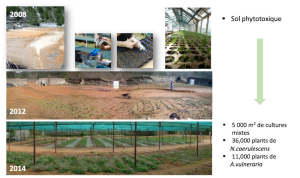
In Pacific Palisades and across California, the fire damage and rebuilding crisis expose the old system’s failure.
The federal openings and existing code pathways give immediate tools. We do not have to wait for a new state structure that recreates the same centralized control.
If Spencer Pratt Reads This — A Practical Path for Los Angeles
If Spencer Pratt becomes mayor of Los Angeles, he has a historic opportunity to break the cycle. Here is how he could approach it:
- Lead with Regenerative Rebuilding — Declare LA a model for post-fire and climate-resilient rebuilding that prioritizes soil healing first (phytoremediation pilots in burn zones) then natural, low-toxicity materials. Leverage the federal disaster streamlining EO and Appendix BL to fast-track hempcrete, straw bale, and earthen construction where they meet performance standards.
- Cut the Toxic Load — Launch a city-wide “Healthy Homes & Healthy Soil” initiative under the MAHA banner. Require or incentivize low-VOC, non-toxic materials in public projects and offer streamlined permitting for private builders who choose regenerative options. This directly reduces the chemical body burden on Angelenos.
- Empower Local Sovereignty — Push for performance-based (not purely prescriptive) building standards at the city and county level. Give neighborhoods and community groups real input on what enters their environment instead of one-size-fits-all rules that favor the same industrial giants.
- Build Parallel Local Economies — Support closed-loop regenerative clusters — local hemp and natural fiber production, modular natural building manufacturing, and soil restoration enterprises. This creates jobs, reduces dependency on distant supply chains, and keeps wealth circulating in LA communities.
- Tell the Truth Publicly — Use the bully pulpit to name the pattern: decades of “safety” standards that delivered toxicity and control while sidelining abundant, God-given alternatives. Frame the new direction as restoring dignity, health, and abundance for working families — not ideology.
Pratt already has Trump’s ear and an outsider reputation.
He can position LA as the national test case for breaking the chemical slow-kill infrastructure and replacing it with Kingdom-aligned, regenerative systems that actually heal people and land.
The giants chose the path of steal, kill, and destroy. We choose the path of life and abundance — building parallel systems that heal the land, restore dignity, and reflect the Kingdom on earth as it is in heaven.
Iron sharpens iron. The time to build is now.